Friday, March 10, 2017
Window seat
Longest sunset ever -- on the way to Seattle -- Feb. 27, 2017
Rain to snow to sunshine -- on the way home to Salt Lake City -- March 9, 2017
Sunday, February 19, 2017
On finding freedom
Twice a week for four years I went to Fatuma's home to help her in the transition to America.
Fatuma was from Somalia, though she'd lived in refugee camps in Kenya for a good portion of her life.
Her husband was already good at English and had a job at the airport when I first started to their home.
Her older children were in school and a second language seemed to come easily to them.
Fatuma was home with babies and toddlers so getting to a class was difficult. Going to the store was intimidating. Dealing with American traditions was overwhelming.
So after some training, I got signed up to help.
I don't know if she learned anything over those four years of pictures and letters and flashcards and props and stories and explanations and sharing and trying and trying again.
But I did.
I learned about the price of opportunity. The price of freedom.
She had loved her home in Africa.
Her father had land and hundreds of animals. Life was simple. Children were home. Families were together.
But unrest made their home unsafe.
"Everybody wants to be the government," her husband told me when I asked about the government in Somalia. "Everybody fights. Everybody dies."
So they brought their family to America.
It wasn't easy.
Not to get here and not to adjust to here.
I taught Fatuma about our money, about our holidays (Halloween was especially unfathomable for her), about our schools.
I taught her husband, Ali, and his sister, Zeinab, about our government and our history and our geography to help them prepare to take their citizenship tests.
And they taught me.
I saw the love in their home. Young children helped younger children. Multiple generations lived together and took care of each other's needs.
I saw a deep religiosity in their home. Even young girls wore headscarves when they went to school or if I wanted to take a picture of them. They had a special room for worship and prayer. They fasted from sunrise to sundown for the month of Ramadan, even when it meant headaches and weakness.
During one visit, they were upset for a sister who had been resettled to Alaska. She was alone with children, had been sent their in the randomness of refugee resettlement decisions made by someone they would never be able to reach or reason with, and had no one to talk to or to understand her.
They wanted to drive there. Or fly her to Utah. Or find some way to help.
But we were all helpless.
Resettling to America isn't for the faint of heart.
It is for the brave. For those willing to risk all they know and understand for something new and frighteningly different.
They do it because there is safety here.
And one would help they would find support and understanding and acceptance as well.
Fatuma and Ali and their family moved to Minnesota some years ago so our weekly visits have ended.
They went for new opportunities and a larger community from their homeland to support and relate to them.
While I no longer spend time with them, I continue to have hope for them and the children they brought to America to provide a future of opportunity and security.
They are all American citizens now.
They know about the balance of powers, the first president, the longest river, the countries at our borders, the rights and responsibilities of citizenship.
And when they took the naturalization oath to become citizens, they renounced allegiance to any other country and pledged to support ours in any way that might be asked of them.
And though I never used to worry about what is ahead for them here, things have changed.
They are free from the fear and oppression of the homeland of their birth.
I hope they can be free from fear in their new one.
"Give me your tired, your poor," reads the poem inside the pedestal of the Statue of Liberty, "your huddled masses yearning to breathe free, the wretched refuse of your teeming shore. Send these, the homeless, tempest-tossed to me. I lift my lamp beside the golden door."
Thursday, January 12, 2017
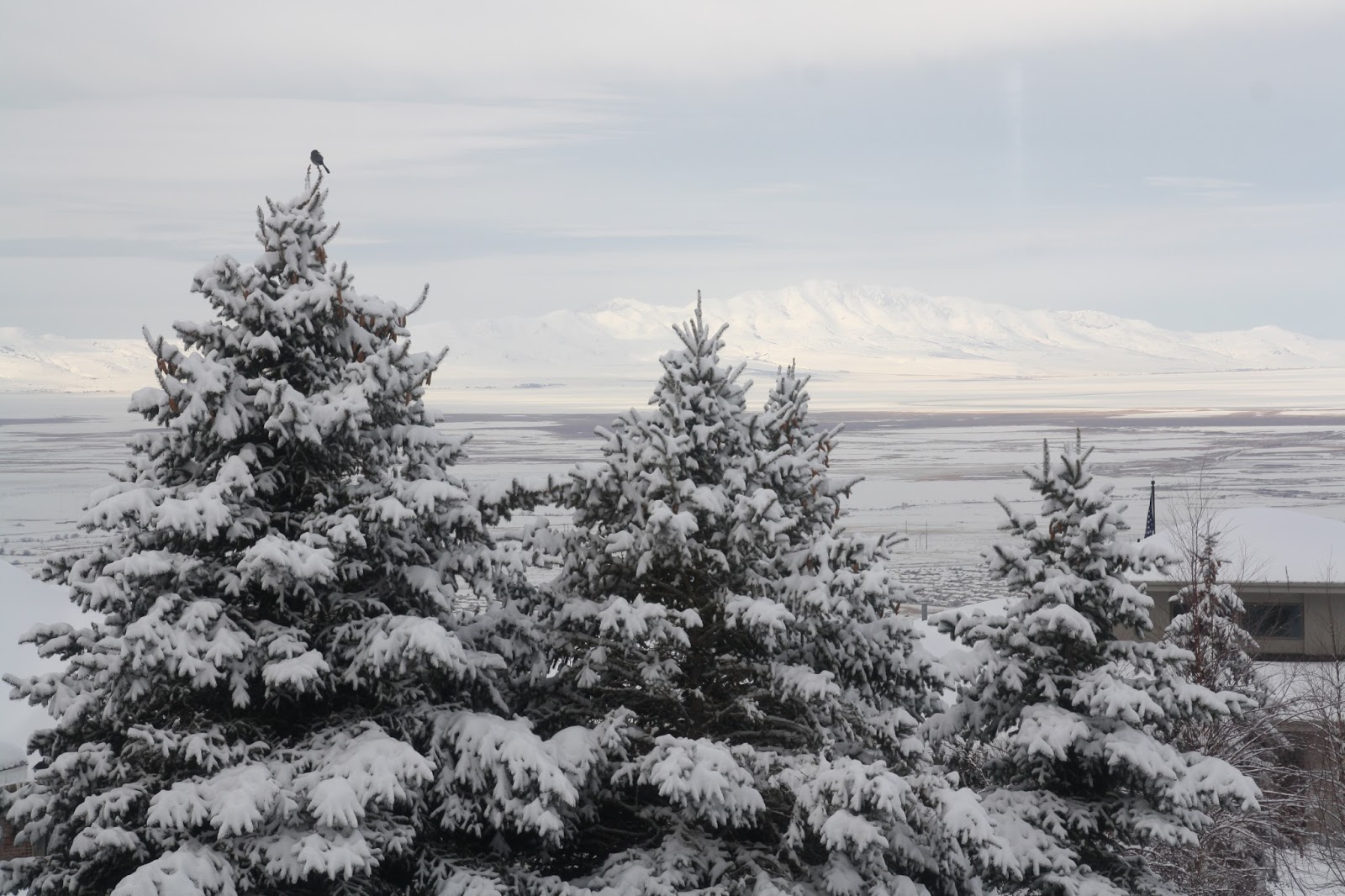
Winter weather
White and wooly.
We've had it all these past few weeks -- wind and rain,
sleet and snow, bitter cold and surprising warmth.
Kinda pretty, though, yes?!
Wednesday, December 28, 2016
Pacific Ocean
From Oregon, October 2016:
From Hawaii, November 2016:
More Pacific Ocean in the next two months!!!!!
Never enough.
Sunday, November 6, 2016
Saturday, October 8, 2016
A couple of favorites from the last couple of months
Standing guard over an Edsel at a recent car show, this pooch made me very glad he was inside the car and I was outside.
Always a meaningful moment - when something is planted. It is a combination of foresight and hope. And for a child to do it in a desert spot is all the more sweet.
Too short to see the action, but tall enough to stand in respect at a recent ceremony at Hill Air Force Base. Yeah for kids and the parents who bring them to events that have significance.
Better than a pie contest. These kids won't suffer too much if they eat enough watermelon to win at the county fair.
Friday, September 16, 2016
A trait that can be both seen and lived
Sometimes you see nobility in the most surprising places.
And if nobility seems an odd word to use these days, let me explain that I've just returned from two days of plays in Cedar City, including Shakespeare's Julius Caesar and Dumas' adapted Three Musketeers, so nobility is on my mind. (Plays were great, by the way.)
What I mean by being noble is having class, or having dignity and class put together, or just generally acting better than the normal every day way people generally act.
It's doing something extraordinary in an ordinary situation. Or something surprising when surprising isn't necessarily called for.
You don't often see nobility at city council meetings.
City council meetings are where people go to complain about the snow plows coming too late or insist that the traffic on their street should be slower than it is or that the new development down the street would do irreparable damage to their schools and their roads and their peace of mind.
City council meetings are where people get mad if their taxes are going to be raised or their police station is going to be built too big or their new neighbors will drive in front of their houses instead of the people's houses two streets over.
Don't ask me how I know.
But because I am so intimately aware of what happens at city council meetings, I was so unexpectedly surprised when something out of the ordinary happened.
In his last meeting as a city employee, Vance Garfield stood at the mic (something he is normally loath to do), and said he had made a mistake and would make amends, when he very well could have defended his involvements or justified his decisions or passed the blame to anyone and everyone else, as had been happening throughout the rest of the meeting.
A bright spot that was so unexpected it brought a burst of applause.
You don't always see nobility at breakfast.
But this breakfast was to kickoff a major fundraising campaign for breast cancer research and support.
I had been introduced to several who had survived their battles with breast cancer and heard their stories. Then I sat at a table and introduced myself to two young women and their father.
They were there, they said, in memory of their mother and wife. She died just 18 months ago and they were supporting every fundraiser, volunteering for every event, purchasing every fundraising item, in her honor.
They didn't have to get up for a 7:30 a.m. breakfast. They didn't have to round up people and ask for donations. They didn't have to do a Saturday-morning walk or spend money in support of the cause.
They did it out of love. Even though it was too late to save their loved one, they wanted to help save others'. It was noble.
You see nobility quite often as a reporter.
The church group gathering supplies for refugees, the military wife waiting to introduce her new baby to a husband just getting back from a deployment, the teacher dedicating her ideas and energies to her young students despite the criticisms and changes in law and lack of respect she and others in her profession regularly receive.
Anybody can be noble. If not always, then maybe here or there.
It just takes admitting when something went wrong, standing up for what is right, thinking of others besides yourself.
It's impressive to see.
Watch for it.
Be it.
And if nobility seems an odd word to use these days, let me explain that I've just returned from two days of plays in Cedar City, including Shakespeare's Julius Caesar and Dumas' adapted Three Musketeers, so nobility is on my mind. (Plays were great, by the way.)
What I mean by being noble is having class, or having dignity and class put together, or just generally acting better than the normal every day way people generally act.
It's doing something extraordinary in an ordinary situation. Or something surprising when surprising isn't necessarily called for.
You don't often see nobility at city council meetings.
City council meetings are where people go to complain about the snow plows coming too late or insist that the traffic on their street should be slower than it is or that the new development down the street would do irreparable damage to their schools and their roads and their peace of mind.
City council meetings are where people get mad if their taxes are going to be raised or their police station is going to be built too big or their new neighbors will drive in front of their houses instead of the people's houses two streets over.
Don't ask me how I know.
But because I am so intimately aware of what happens at city council meetings, I was so unexpectedly surprised when something out of the ordinary happened.
In his last meeting as a city employee, Vance Garfield stood at the mic (something he is normally loath to do), and said he had made a mistake and would make amends, when he very well could have defended his involvements or justified his decisions or passed the blame to anyone and everyone else, as had been happening throughout the rest of the meeting.
A bright spot that was so unexpected it brought a burst of applause.
You don't always see nobility at breakfast.
But this breakfast was to kickoff a major fundraising campaign for breast cancer research and support.
I had been introduced to several who had survived their battles with breast cancer and heard their stories. Then I sat at a table and introduced myself to two young women and their father.
They were there, they said, in memory of their mother and wife. She died just 18 months ago and they were supporting every fundraiser, volunteering for every event, purchasing every fundraising item, in her honor.
They didn't have to get up for a 7:30 a.m. breakfast. They didn't have to round up people and ask for donations. They didn't have to do a Saturday-morning walk or spend money in support of the cause.
They did it out of love. Even though it was too late to save their loved one, they wanted to help save others'. It was noble.
You see nobility quite often as a reporter.
The church group gathering supplies for refugees, the military wife waiting to introduce her new baby to a husband just getting back from a deployment, the teacher dedicating her ideas and energies to her young students despite the criticisms and changes in law and lack of respect she and others in her profession regularly receive.
Anybody can be noble. If not always, then maybe here or there.
It just takes admitting when something went wrong, standing up for what is right, thinking of others besides yourself.
It's impressive to see.
Watch for it.
Be it.
Subscribe to:
Posts (Atom)